
 Even the smallest air leaks can lead to wasted products and energy and loss of production time, especially in a production line that can only function with compressed air to drive tools and processes. Detection of air leaks saves you a lot of money!
If there is not enough compressed air pressure to keep the equipment functioning optimally, there can be costly consequences. The more leaks there are in the system, the harder the compressor has to work to supply the required air to the equipment, which is not optimal for the compressor. This increase in demand increases the risk of insufficient compressed air being supplied to tools and process equipment.
Compressed air leaks also increase energy costs. According to the U.S. Department of Energy, a 1/8″ (3 mm) leak in a compressed air line can cost more than $2,500 a year.
A partner in air leak detection
How do you make sure you are not behind the curve in controlling air leaks when you have so many other priorities? That is the question a leading heavy equipment manufacturer recently saw answered when it discovered a new partner in the field of air leak detection.
This manufacturer uses between 3058 and 4417 m3/h of compressed air daily. That volume of compressed air serves up to 200 instant tools per line, as well as the process equipment responsible for moving large sheets of steel half an inch thick and positioning parts. Even if there is a leak in one line, it can affect production and increase energy wastage. And that's just one leak...
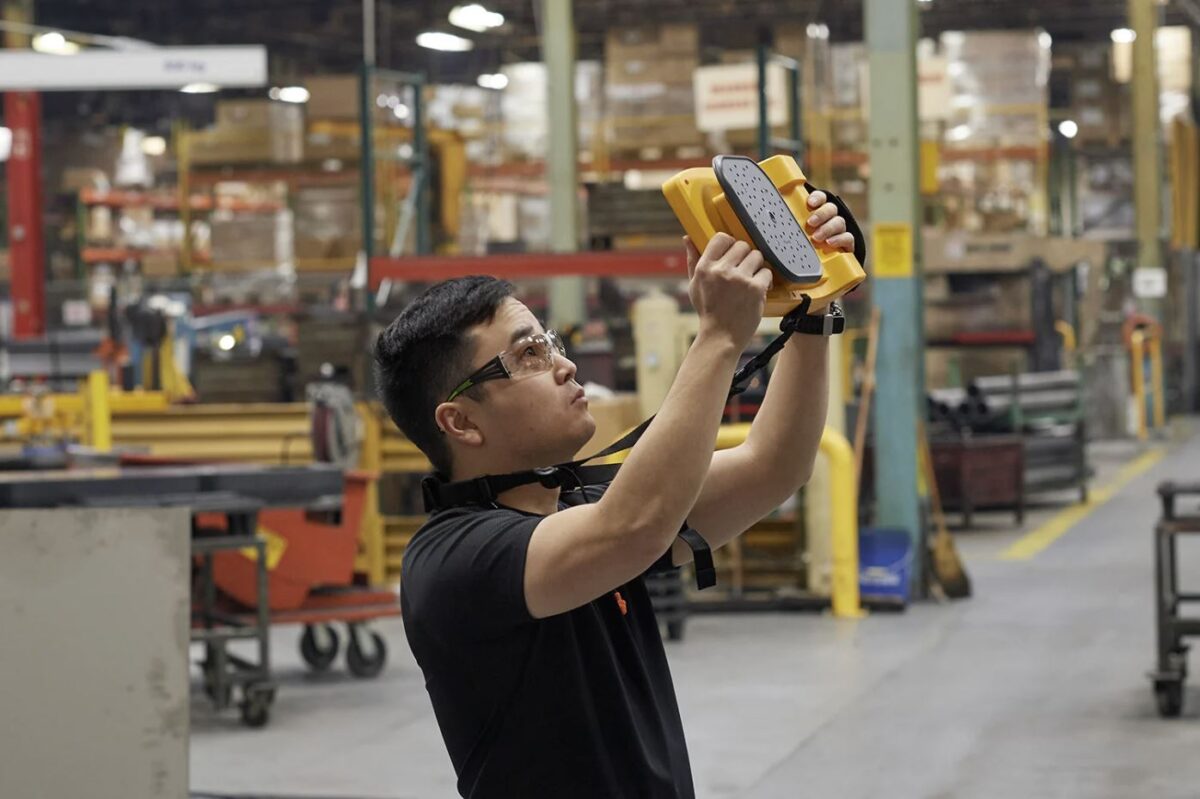
When Fluke offered the company the chance to develop the new Fluke ii900 Sonic Industrial Imager (Acoustic Imager), they immediately agreed. The ii900‘s array of small, super-sensitive microphones detects sounds in both the range of human hearing and the ultrasonic range and, even more uniquely, allows the user to actually ’see' sound for air leak detection.
“That we can now visualise where the problem is, adds a whole new dimension,” says the company's maintenance manager. “You can identify which thread, coupling or hose the leak is in. It's great to be able to identify on screen exactly where the leak is coming from.”
The ii900 can visually scan large areas up to a distance of 50 metres, speeding up detection of air leaks in the plant and significantly reducing the number of hours previously spent on that task.
“Sometimes we can find and repair as many as 30 to 40 leaks in a few hours,” says the manager. “And we can use the ii900 during production time, when extreme noise is produced, and still find leaks at the roof level 6 to 9 metres away.”
Scanning for leaks without affecting production offers a big advantage for the manufacturer. “Before, it didn't occur to us to test for air leaks during production because we couldn't cordon off the aisles and get people out of a certain area to go up and look at a possible leak,” says the manager. “Now we can stand along the sidelines and scan the air ducts above us while carts and people move underneath. We don't affect their operations and it's better for everyone.”