Archives for Leak detection

air leak detection equipment

How air leak detection equipment prevents downtime

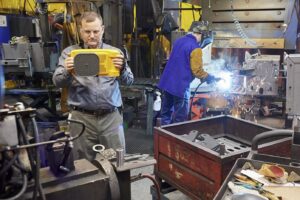
Fluke interviewed a manufacturer about air leaks. This manufacturer literally keeps the wheels of the industry turning. As one of the world's leading aftermarket manufacturers of wheel service equipment, the company designs, builds and sells products for trusted and leading brands.

Many of this manufacturer's processes depend on compressed air, and the 14,000 sq m factory has some 400 tools, all powered by a 200 hp compressor. “Everywhere in the plant we use compressed air - for pneumatic drives, robotic welders, laser cutting machines and powder coating equipment,” says the plant director. Compressed air usually involves noise, as well as air leaks.

Ask our experts for advice

Reducing energy waste

Air leaks cause compressed air-powered equipment to have to work harder, leading to energy wastage. The likelihood of air leaks in the factory is further increased by the presence of older equipment accumulated over the last few decades due to consolidation of several factories. In such a noisy environment, any leaks are difficult to hear, so most leak detections are carried out outside factory hours.

“We usually wait until it is very quiet in the building, outside working hours or during a maintenance shutdown, and try to detect air leaks by listening as closely as possible,” says the maintenance manager. “We also use bottles of soapy water to spray on an area where we think there is a leak and then see if air bubbles form.” This spray-and-see method requires members of the maintenance team to be close enough to the potential leak to hear it and then spray the soap solution on the right area.

The other method used to detect compressed air leaks is detection with ultrasonic air leak detection equipment. This method can only be carried out by a well-trained person and detecting all leaks takes quite some time. Small leaks can be very difficult to hear with the human ear and not all leaks are in easily accessible places. So detection can be a difficult task.

Make visible what you cannot hear

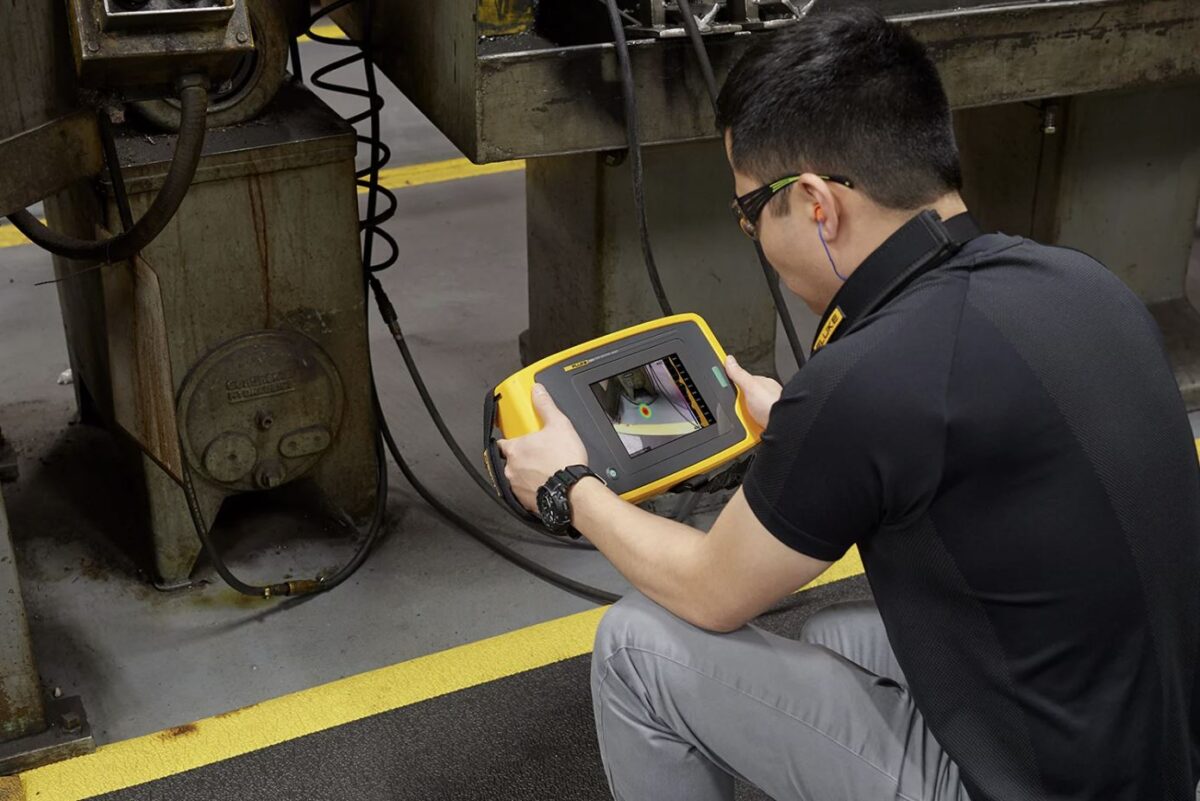
When Fluke approached this manufacturer about whether it would cooperate in testing the Fluke ii900 Sonic Industrial Imager, which can detect leaks up to 50 metres away in a noisy environment, this one was rather sceptical but very willing to try it.

The testing involved both the head of maintenance and the maintenance engineer, who alternately examined the entire plant for leaks for eight hours with two ii900 Sonic Industrial Imagers. The ii900 allowed them to ‘see’ sound while checking hoses, fittings and connections for leaks. The leak survey had a surprising outcome for the production team.

Within one working day, they found around 143 leaks, both large and small.

“I did have some doubts about the leaks the tool found, so I sprayed those spots with soapy water and indeed saw that there was a leak where the tool indicated there was one,” says the maintenance engineer.

The maintenance manager was particularly impressed by the ii900“s ability to find even the smallest leaks. ”Small leaks are very difficult to find,“ he says. ”I noticed there were leaks that the ii900 detected that we would never have found by spraying soapy water on them. We found one leak in an air pipe in the paint room that we could not feel by holding our hand above it or by listening, but it was clear that this leak had been there for some time."

The ii900's built-in acoustic array of sensitive microphones generates a spectrum of decibel levels for each frequency. Based on this output, an algorithm calculates a sound image called a SoundMap™ and this is projected onto a visible image. The SoundMap is automatically adjusted to the selected frequency level to filter out background noise. The SoundMap is updated 10 to 20 times per second on the screen.

Long-range air leak detection

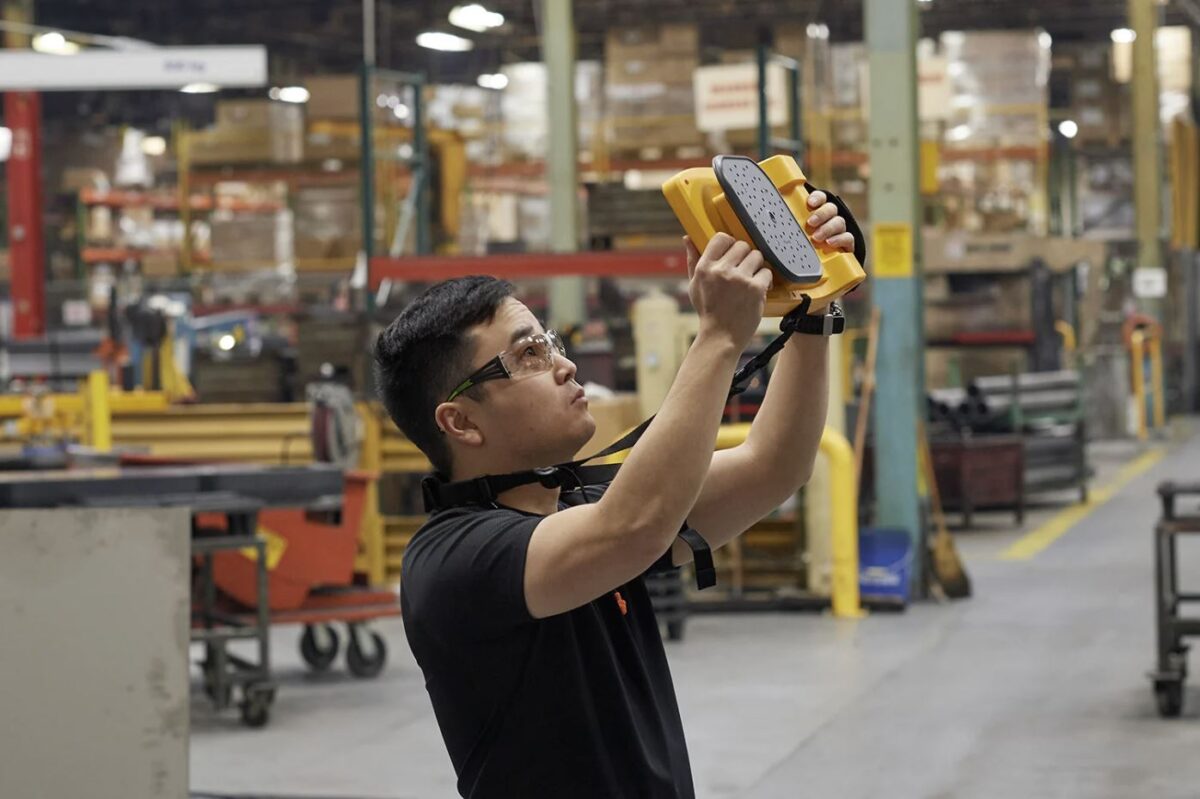
The team quickly detected a leak at 26 feet in an upper air line.

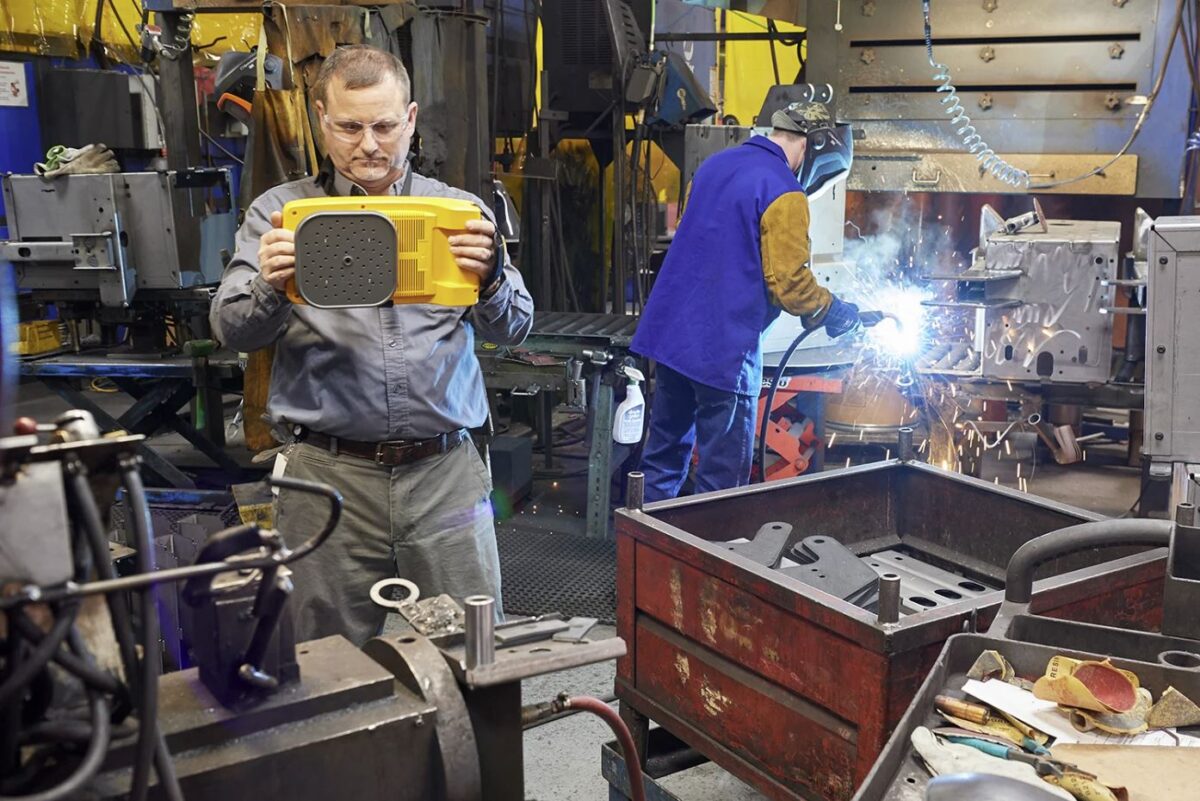
“I was amazed at how easy it was to pick up the Fluke sound imaging camera and walk through the aisles to scan spaces overhead and still detect leaks very quickly,” says the maintenance manager.

The production team recognises that not only are very hard-to-detect leaks now easy to detect, but the ii900 can save significant time and costs. “Once we have found and fixed most of the leaks the first time, we can probably do a follow-up and scan the whole plant in one shift of about eight hours.” That way, huge savings can be made on overtime costs because they can already scan for air leaks during the normal day shift, instead of outside working hours.

It also leads to less energy wastage and wear and tear on equipment. “Air leaks also cause the company to lose a lot of money,” says the maintenance manager. “They are very hard to detect, so it is also difficult to send the maintenance team to the right place. Now we can take a picture of the leak with the Fluke sound imaging camera and send it to our maintenance teams as part of the work order, and it is much more cost-effective. We think it will save us a significant sum of money, both on labour and energy costs.”
Read more
detection of air leaks

Faster detection of air leaks

Even the smallest air leaks can lead to wasted products and energy and loss of production time, especially in a production line that can only function with compressed air to drive tools and processes. Detection of air leaks saves you a lot of money!

If there is not enough compressed air pressure to keep the equipment functioning optimally, there can be costly consequences. The more leaks there are in the system, the harder the compressor has to work to supply the required air to the equipment, which is not optimal for the compressor. This increase in demand increases the risk of insufficient compressed air being supplied to tools and process equipment.

Compressed air leaks also increase energy costs. According to the U.S. Department of Energy, a 1/8″ (3 mm) leak in a compressed air line can cost more than $2,500 a year.


Ask our experts for advice

A partner in air leak detection

How do you make sure you are not behind the curve in controlling air leaks when you have so many other priorities? That is the question a leading heavy equipment manufacturer recently saw answered when it discovered a new partner in the field of air leak detection.

This manufacturer uses between 3058 and 4417 m3/h of compressed air daily. That volume of compressed air serves up to 200 instant tools per line, as well as the process equipment responsible for moving large sheets of steel half an inch thick and positioning parts. Even if there is a leak in one line, it can affect production and increase energy wastage. And that's just one leak...

When Fluke offered the company the chance to develop the new Fluke ii900 Sonic Industrial Imager (Acoustic Imager), they immediately agreed. The ii900‘s array of small, super-sensitive microphones detects sounds in both the range of human hearing and the ultrasonic range and, even more uniquely, allows the user to actually ’see' sound for air leak detection.

“That we can now visualise where the problem is, adds a whole new dimension,” says the company's maintenance manager. “You can identify which thread, coupling or hose the leak is in. It's great to be able to identify on screen exactly where the leak is coming from.”

The ii900 can visually scan large areas up to a distance of 50 metres, speeding up detection of air leaks in the plant and significantly reducing the number of hours previously spent on that task.

“Sometimes we can find and repair as many as 30 to 40 leaks in a few hours,” says the manager. “And we can use the ii900 during production time, when extreme noise is produced, and still find leaks at the roof level 6 to 9 metres away.”

Scanning for leaks without affecting production offers a big advantage for the manufacturer. “Before, it didn't occur to us to test for air leaks during production because we couldn't cordon off the aisles and get people out of a certain area to go up and look at a possible leak,” says the manager. “Now we can stand along the sidelines and scan the air ducts above us while carts and people move underneath. We don't affect their operations and it's better for everyone.”

Read more
detecting gas and vacuum leaks

This is how you detect compressed air, gas and vacuum leaks AND find hidden profits

For industrial plants, compressed air, gas and vacuum systems are an essential source of converted energy. Compressors are simpler than other sources of energy such as electricity and they are everywhere in today's factories. They power machines, tools, robots, lasers, product handling systems and much more.

Yet many compressed air, gas and vacuum systems suffer from wear and poor maintenance, contributing to the biggest waste of all: ever-present leaks. These leaks may be hidden behind machinery or located at connection points, in fixed overhead lines or in cracked pipes or worn hoses. The waste increases rapidly and can even lead to downtime.

Ask our experts for advice


The high cost of wasted air

According to the U.S. Department of Energy, the US Department of Energy, a 1/8″ (3 mm) leak in a compressed air line can cost more than $2,500 a year. The Department of Energy estimates that an average US plant that is not properly maintained can waste 20% of its total compressed air production capacity due to leaks. The New Zealand government, as part of its Target Sustainability project, estimates that system leaks can account for 30 to 50% of a compressed air system's capacity. Rapid detection of compressed air, gas and vacuum leaks is a key factor in finding hidden profits. Air leaks can also lead to capital expenditure, rework, downtime or quality problems and higher maintenance costs.

To compensate for pressure loss due to leaks, business managers often tend to overcompensate by purchasing a larger compressor than necessary, which incurs significant capital costs and higher energy costs. System leaks can also lead to air equipment failure due to low system pressure. This can lead to production delays, unplanned downtime, quality problems, shorter lifespan and increased maintenance due to unnecessary switching compressors on and off.

For example, the maintenance manager of a manufacturer in the US says that low pressure in one of their air tools can lead to defects in their products. “Incorrect torque, either too low torque or too high torque, can result in recalls. This also leads to more man-hours in something that should be a very standard process,” he says. “It is throwing money down the drain through loss of profits and loss of products. At worst, demand may also be at risk because we could not deliver.”

It is no wonder that utilities, industry and government see compressed air systems as a potential source of cost savings. Leaks lead to waste. Fixing such leaks can save the company manager money and prevent the utility from having to build additional capacity into the system.

Detecting and fixing leaks is not easy

Unfortunately, the most common leak detection practices are rather primitive. An old-fashioned method is to listen for hissing sounds, which are almost impossible to hear in many environments, and spray soapy water on the area of the suspected leak, which is messy and could potentially be a slip hazard.

The current tool for detecting compressor leaks is a ultrasound detector, a portable electronic device that recognises high-frequency sounds related to air leaks. Typical ultrasonic detectors help find leaks, but their use is time-consuming and repair staff can usually only use them during scheduled downtime, while servicing other critical machinery may be a better use of time. These instruments also require the operator to be close to the equipment to find leaks, making the instruments difficult to use in hard-to-reach places such as ceilings or behind other equipment.

In addition to the time required to detect gas and vacuum leaks with suds or ultrasonic detectors, there may be safety issues with these techniques regarding finding leaks above or below equipment. Climbing ladders or crawling around equipment can be hazardous.

Pioneering for gas and vacuum leak detection

What if there was a leak detection technology that could determine the exact location of a leak up to 50 metres away, in a noisy environment, without having to turn off equipment? Fluke has developed an industrial thermal imaging camera that does just that. Industrial maintenance managers call the ii900 Sonic Industrial Imager “Pioneering” for compressed air leak detection.

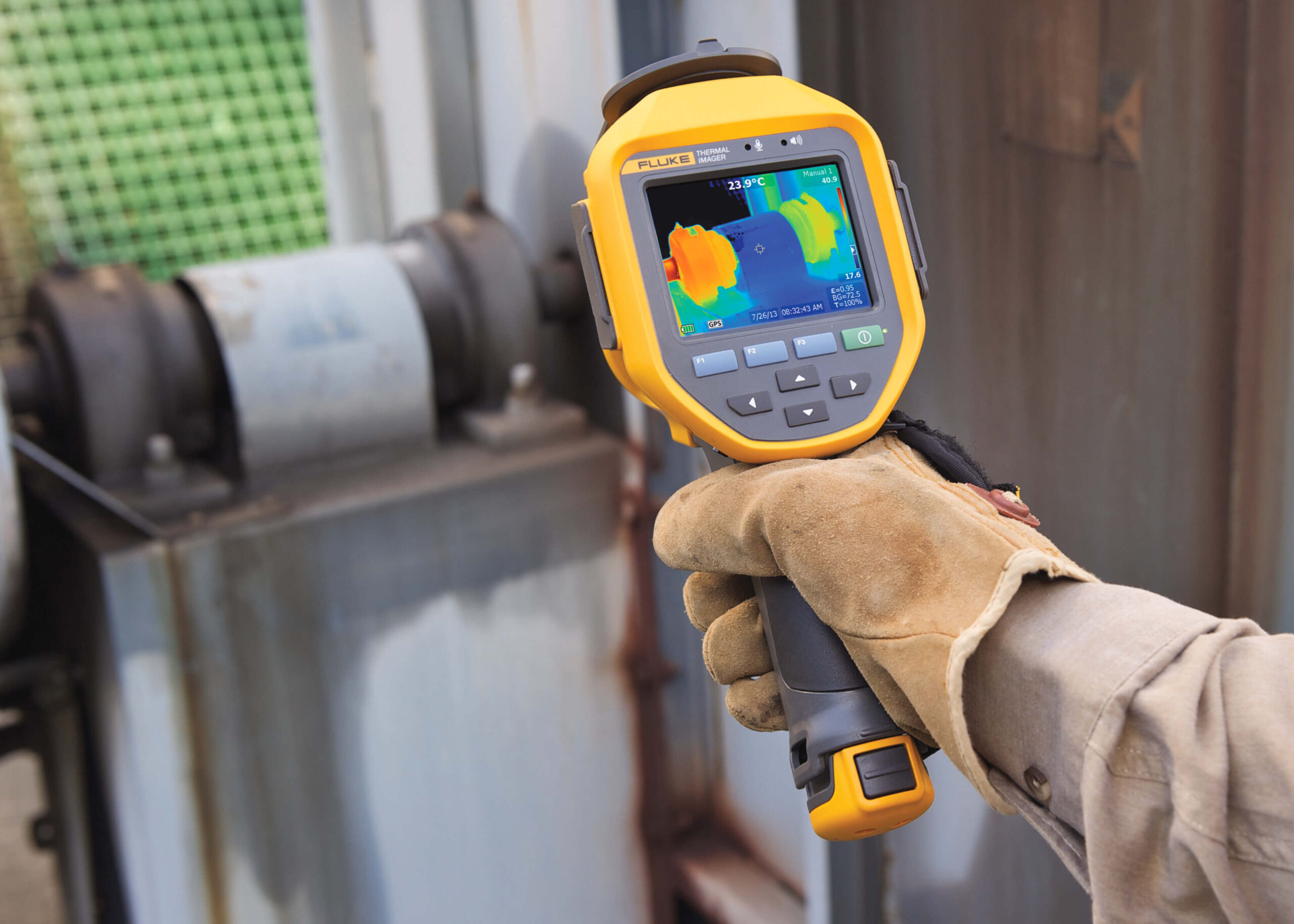
This new acoustic industrial camera, which can detect a wider frequency range than traditional ultrasonic devices, uses the new SoundSight™ technology to provide enhanced visual scans of air leaks, as well as thermal imaging cameras detect hotspots.

The ii900 features an acoustic array of small, super-sensitive microphones that detect both sonic and ultrasonic sound waves. The ii900 recognises a sound source at a potential leak location and then applies algorithms that interpret the sound as a leak. The results produce a SoundMap™ image, a colour map overlaid on top of the visible-light image, - showing exactly where the leak is. The results are displayed on the 7-inch LCD screen as a still image or real-time video. The ii900 can store up to 999 image files or 20 video files for documentation or compliance.

Large areas can be scanned quickly, detecting leaks much faster than other methods. Filtering can also be done by intensity and frequency ranges. A team at a large factory recently used two ii900 prototypes and detected 80 compressed air leaks in one day. The maintenance manager said that using traditional methods it would have taken weeks to find that number of leaks. By quickly detecting and fixing leaks, the crew also avoided potential downtime, which can cost an estimated $100,000 an hour in lost productivity at this plant.

Where to find leaks:

  • Links
  • Snakes
  • Tubes
  • Fittings
  • Threaded pipe connections
  • Shortcuts
  • FRLs (combinations of filter, regulator and lubricator)
  • Condensate traps
  • Valves
  • Flanges
  • Gaskets
  • Air supply boilers

How much air do you waste?

The first step in controlling gas and vacuum leaks is to estimate the leakage rate. Some leakage (less than 10%) is to be expected. Anything more is considered wastage. The first step is to determine your current leakage load so that you can use it as a benchmark against which to compare improvements.

The best method for estimating leakage load is based on your control system. If you have a system with start/stop control, simply start your compressor when there is no demand in the system - after working hours or shifts. Then measure a number of compressor cycles to determine the average time before the loaded system is unloaded. If there is no equipment in operation, the unloading of the system is due to leakage.

Leakage (%) = (T x 100) ÷ (T + t)T = load time (minutes), t = relief time (minutes)

To estimate the leakage load in systems with more complex control strategies, place a pressure gauge downstream of the volume (V, in cubic metres), including all secondary boilers, mains and pipes. If there is no demand in the system, except for leakage, bring the system to normal working pressure (P1, in psig). Select a second pressure (P2, about half the value of P1) and measure the time (T, in minutes) it takes the system to drop to P2.

Leakage (cfm free air) = [(V x ( P1 - P2) ÷ (T x 14.7)] x 1.25

The multiplier 1.25 corrects leakage to normal system pressure, taking into account lower leakage as system pressure decreases.

Efficiently fixing and repairing leaks can lead to significant cost savings for air-dependent businesses. Companies can not only save on energy consumption by repairing leaks, but can also improve production and extend the life of equipment.

Read more

Need advice?

Contact our product specialist Thiara for help in choosing the right instrument.
Contact Thiara