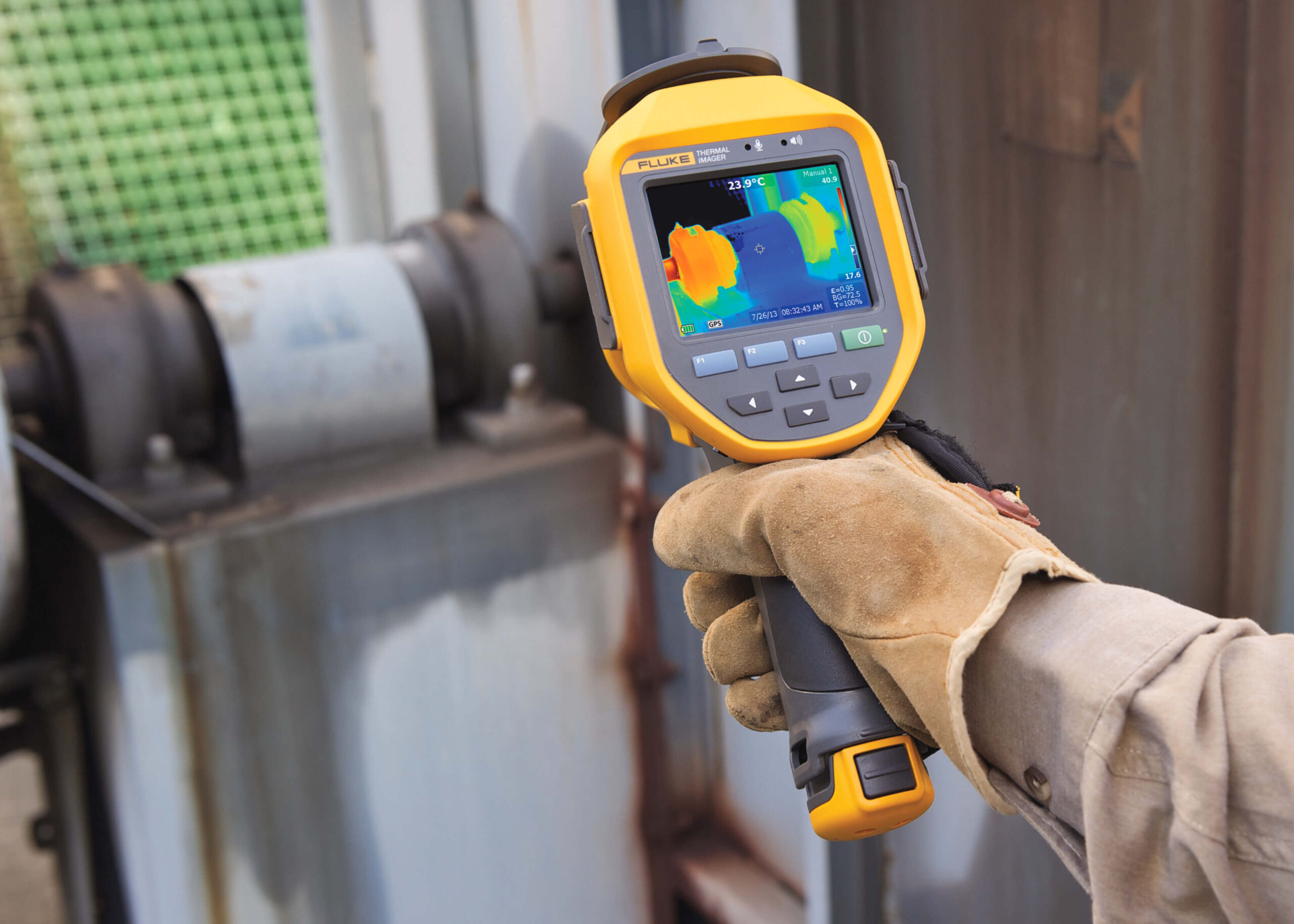

 Electric motors are the most important component in many industrial processes. They can account for as much as 70% of the total energy consumption in an industrial plant, and they consume up to 46% of all electricity generated worldwide. Given their critical nature for industrial processes, the cost of downtime due to faulty motors can amount to tens of thousands of euros per hour. Ensuring efficiency and reliability of electric motors, is one of the most important tasks maintenance technicians and engineers face on a daily basis.
The efficient use of electricity is not merely ‘pleasant’. In many situations, energy efficiency can mean the difference between profitability and financial losses. And since motors consume a significant proportion of energy in the industrial sector, they have become the main target for achieving savings and maintaining profitability. In addition, the quest for cost savings and efficiency improvements and the reduction of dependence on natural resources has led many companies to adopt industry standards such as ISO 50001. The ISO 50001 standard provides a framework and conditions for establishing, implementing and maintaining an energy management system to achieve sustainable savings.
 Traditional test methods for electric motors
The traditional method of measuring electric motor performance and efficiency is well-defined, but the process can be expensive to set up and difficult to apply in work processes. In fact, checking motor performance very often even requires shutting down the entire system, which can lead to costly downtime. To measure the efficiency of electric motors, both electrical input power and mechanical output power must be determined over a wide range of dynamic operating conditions. According to the traditional method of measuring motor performance, technicians must first install the motor in a motor test stand. The test stand consists of the motor to be tested mounted to a generator or a power test bench.
The motor being tested is connected to the load with a shaft. A speed sensor (tachometer) is connected to the shaft as well as a number of torque sensors, which provide data from which mechanical power can be calculated. This system provides data including speed, torque and mechanical power. In some systems, electrical power can also be measured to calculate efficiency.
The return is calculated as follows:

During testing, the load is monitored to determine the efficiency over a range of operating modes. The test setup may seem straightforward, but there are some inherent drawbacks:
- The motor must be taken out of service.
- The motor load is not truly representative of the load driven by the motor during operation.
- During testing, operation must be delayed (leading to downtime) or a replacement motor must be temporarily installed.
- Torque sensors are expensive. They have a limited range, so multiple/different sensors may be needed for testing different motors.
- An engine test stand suitable for a wide range of engines is expensive and users of this type of test stand are usually specialist engine repair shops or engine development companies.
- No account is taken of ‘real’ operating conditions.
Parameters of electric motors
Electric motors are designed for specific load-dependent applications and therefore have different characteristics. These characteristics are classified according to standards of the National Electrical Manufacturers Association or the International Electrotechnical Commission and have a direct effect on the motor's operation and efficiency. Each motor has a nameplate showing the motor's main operating parameters and efficiency data according to NEMA or IEC recommendations. The data on the nameplate can be used to compare the motor's requirements with actual operating conditions. When comparing these values, you may discover, for example, that a motor exceeds the expected speed or torque, which may shorten the motor's life or cause premature motor failure. Other effects such as voltage or current imbalance and harmonics associated with poor mains power quality can also lead to poor motor performance. If any of these conditions occur, the power of the motor - i.e. the expected motor performance - must be reduced, which can lead to process disturbance if insufficient mechanical power is generated. The power reduction is calculated according to the NEMA standard in accordance with the specified data for the motor type. While the NEMA and IEC standards have some differences, they largely follow the same lines.
Real operating conditions
Testing electric motors on a motor test stand usually means testing the motor under the best possible conditions. Conversely, when the motor is operated under real-world conditions, these best operating conditions usually do not exist. These differences in operating conditions all contribute to the deterioration of engine performance. For example, within an industrial plant, loads may be installed that directly affect the mains power quality, causing system imbalance or possibly harmonic distortion. Any of these conditions can seriously degrade motor performance. In addition, the load driven by the motor may not be optimal or consistent with the motor's original design. The load may be too large for the motor to drive properly, or overloaded due to poor process controls. The load may even be hampered by excessive friction caused by a foreign object blocking a pump or a fan impeller. Recording these anomalies can be difficult and very time-consuming, making effective troubleshooting problematic.
A new approach
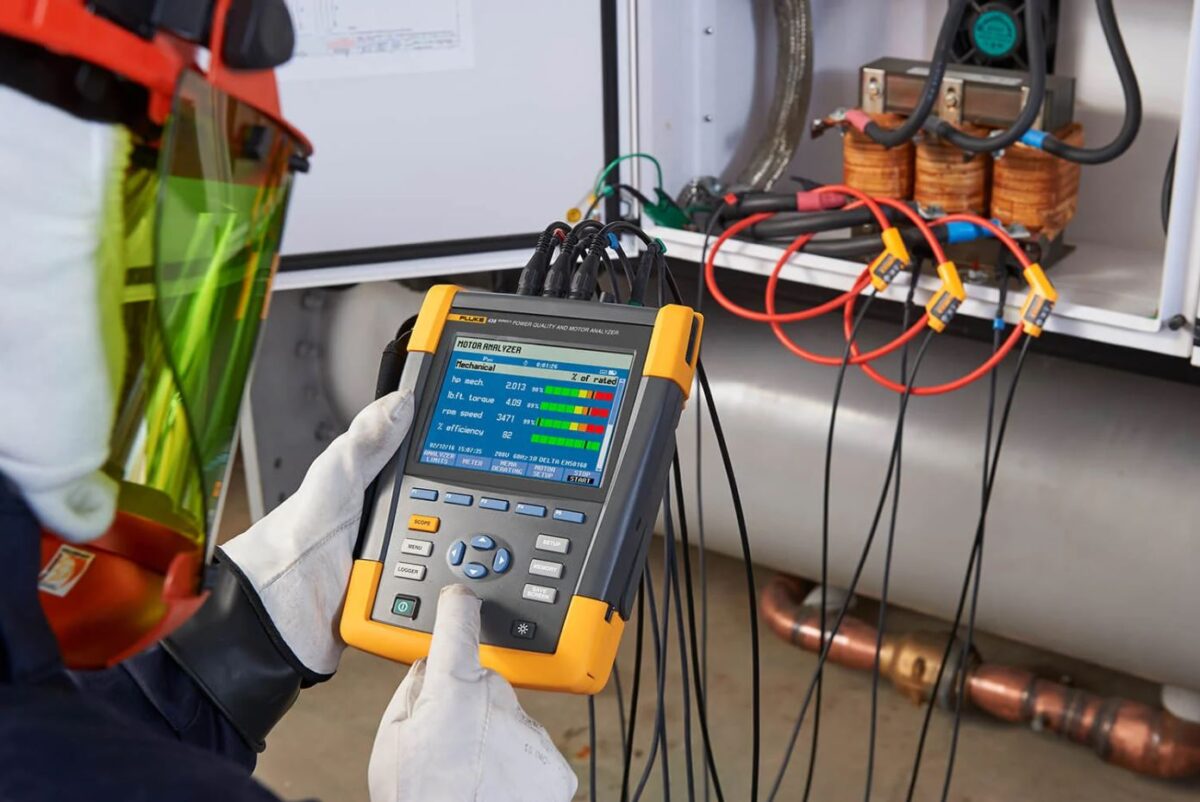
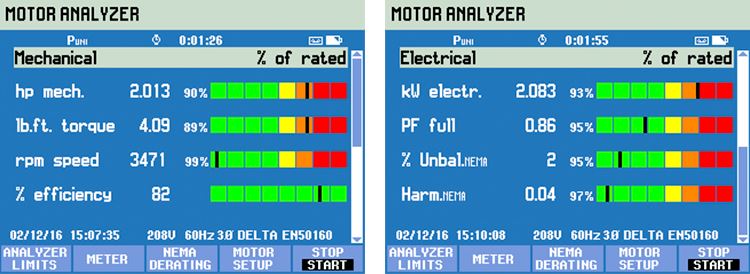
The Fluke 438-IIanalyser for mains power quality and motors provides a streamlined and cost-effective method for testing motor efficiency, eliminates the need for external mechanical sensors and avoids costly downtime. Based on the Fluke 430-II series of mains power quality and energy analysers, the Fluke 438-II has the full functionality for measuring mains power quality while also measuring mechanical parameters for direct-coupled electric motors. Using data on the motor nameplate (either NEMA or IEC data) combined with three-phase power measurements, the 438-II calculates real-time motor performance data such as speed, torque, mechanical power and efficiency, without the need for additional torque and speed sensors. The 438-II also directly calculates the reduction factor of the motor during operation.
The data required by the Fluke 438-II to perform this measurement is entered by the technician or mechanic and includes rated power in kW or hp, rated voltage and current, rated frequency, rated cos φ or power factor, rated duty factor and motor design type of NEMA or IEC classes.
How it works
The Fluke 438-II is capable of mechanical measurements (motor speed, load, torque and efficiency) by applying proprietary algorithms to electrical wave signals. The algorithms combine a mix of physics- and data-driven models of an induction motor, without requiring any of the pre-measurement tests usually required to estimate motor model parameters such as stator resistance. Motor speed can be estimated from the harmonics in the current waveforms produced by the rotor slots. Motor shaft torque can be related to voltages, currents and slip of the induction motor through known but complex physical relationships. Electrical power is measured using the waveforms of the input current and voltage. After estimating torque and speed, mechanical power (or load) is calculated by torque times speed. Motor efficiency is calculated by dividing the estimated mechanical power by the measured electrical power. Fluke has conducted extensive tests on instrumented motors driving power test benches. Actual electrical power, motor shaft torque and motor speed were measured and compared with the values reported by the 438-II to determine accuracy levels.
Overview
While traditional methods for measuring the performance and efficiency of electric motors are well defined, they are not necessarily widely used. This is largely due to the cost because of the downtime involved in shutting down motors, and sometimes entire systems, for testing purposes. The Fluke 438-II provides extremely useful information that has previously been extremely difficult and expensive to obtain. In addition, the Fluke 438-II are advanced mains power quality analysis functions to measure mains power quality while the system is in full operation. Critical motor efficiency measurements are simplified by eliminating the need for external torque sensors and separate speed sensors. This allows the performance of most industrial electric motor-driven processes to be analysed while in operation. This allows technicians to reduce downtime and identify motor performance trends over time, giving them a better picture of the overall condition and performance of the system. By recording trends in performance, changes that may indicate impending motor failures can be identified and replacement is possible before these failures occur.