
 Hydrostatic testing (also known as stack testing or a hydrotest) is a method for pressure testing different containment vessels.
Hydrostatic testing is used in a variety of applications.
The most common applications for these tests are:
- Pipelines
- Tanks
- Homeowner use for plumbing
- Natural gas lines
- Fire extinguishers
- Gas cylinders
- Boilers
- Compressors
- Fire suppression systems such as sprinkler systems
- Distribution systems
Compared to other methods of testing the strength of a container, hydrostatic testing is one of the safest tests you can use to find your results. Essentially, hydrostatic testing can check the integrity of a container vessel and also check for leaks in your system.
Hydrostatic testing uses water as the test medium.
medium, which as we know is NOT compressible. If there is a leak in a pipe system or a failed integrity test of the pipes, the result is that water bursts out of that area while very little pressure is applied.
Generally, hydro tests are performed at 1.5x the nominal pressure of the containment vessel. The vessel, pipeline, tank or whatever application you have is partially filled with water and then pressurised to 1.5x the value of the nominal pressure. Most hydro tests take about 8 hours, but it is not uncommon for a test to take up to 24 hours!
Equipment needed
The equipment used to perform these hydrostatic tests is quite outdated and much of it has not changed since hydrostatic testing became the most reliable test for these applications.
not changed since hydrostatic tests became the most reliable tests for these applications. The typical
equipment list for these tests consists of:
- Chart recorders for pressure and temperature
- Lead weight testers
- Pressure relief valve
- A pressure gauge showing the pressure in the pipes
A card recorder? What are you wondering? Traditionally, hydrostatic tests a a card recorder for pressure and temperature to record these measurements. Card recorders were invented in the mid-1800s and were first used for testing in 1915 and the technology has never really never really changed.
Essentially, a chart recorder is a piece of circular paper that rotates in a circle. As the paper rotates, there is a pen for temperature and a pen for pressure. These pens “convey” the temperature and pressure readings for the duration of the test. Many recorders require a key to wind up the clock. wind up, just like your grandfather's clock from 1900! Later, there was a huge advance of the 9v battery to replace the wound coil and that's pretty much where the innovation in this field stopped.
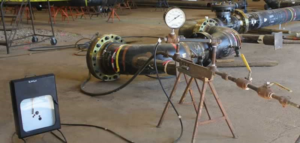
With this 100-year-old testing method, there are many things that can cause an error in this test.
With tests lasting 8 to 24 hours, you really have time to waste on pens running out of ink, technicians losing their paper results, liquid getting on the paper and bleeding your ink, coils needing to be wound up, batteries running out, card storage, etc. Imagine the heartbreak if you pick up your chart after 24 hours and the pen didn't work after hour number 2! Chart recorders are still often used in situations where instant visuals of a test are needed, but perhaps there is no access to power or no access to a computer. However, with today's data recorders reducing cost and power requirements, the chart recorder is fast dying out as the preferred method for these tests. Besides these data recorders, you usually also need a pressure gauge placed in the line and a pressure relief valve.
valve. So wait, are we saying that we no longer need to use 100-year-old technology? Yes indeed!
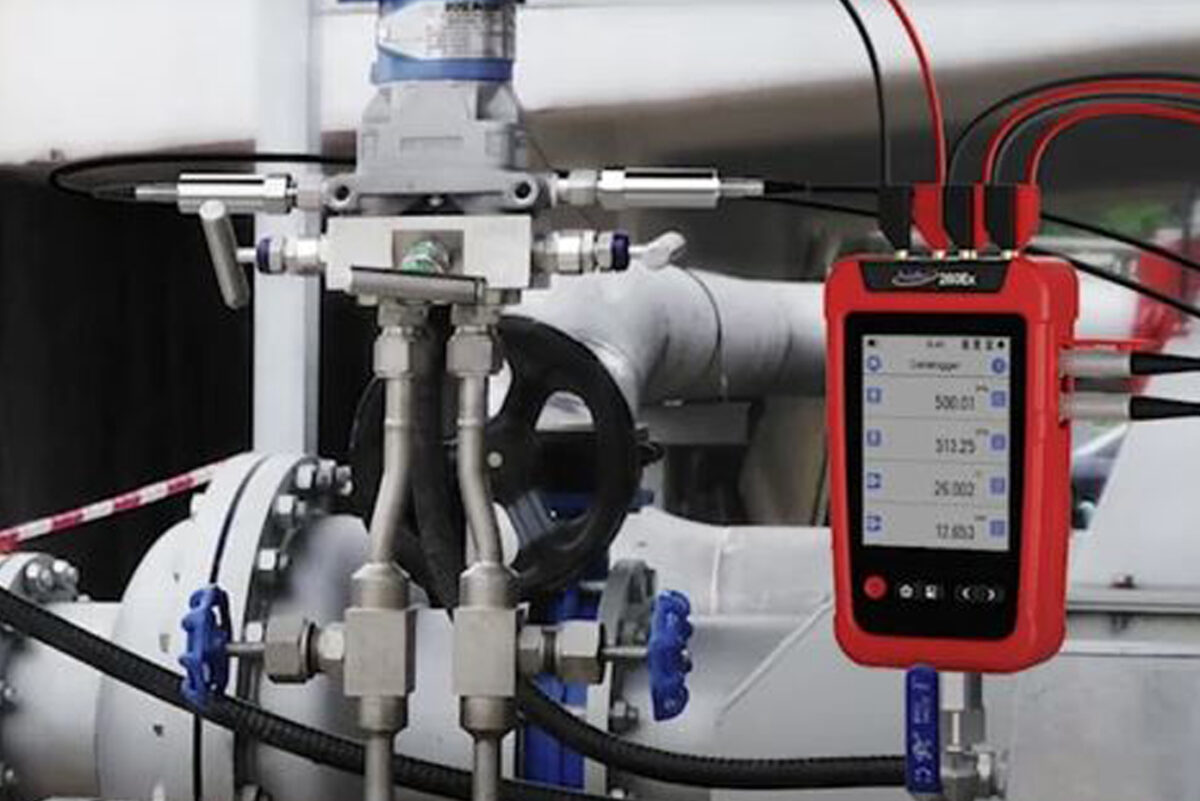
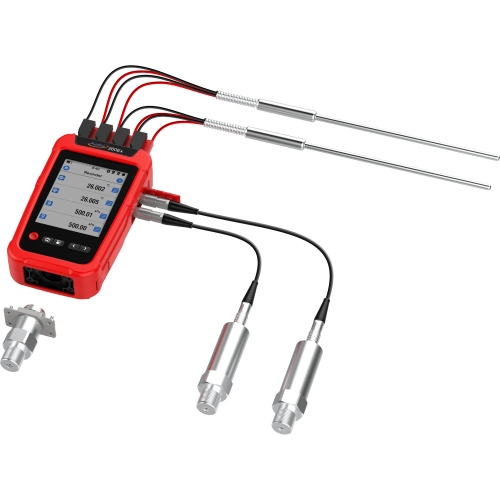 Meet the Additel 260Ex!
This device brings you into the world of running your hydrotests digitally! digital way! Instead of lugging 50lb chart recorders, changing paper and pens, winding up coils and in the rain with a rain with a rubbish bag to cover the chart recorder... now it can all be done digitally and in the palm of your hand. In the digital version of this test, we replace the analogue gauges with our digital pressure sensors.
We replace the RTD whose results are stored with pen and paper and use resistance temperature detectors (RTDs). With the Additel 260Ex you can connect 2 RTD devices for your ambient temperature and pipe temperature. You can use the pressure modules to record pressure and pressure and you throw paper charts in the bin and save your results digitally. in the bin and save your results digitally. When you run your hydro test with our 260Ex, this is what you would expect:
- Using the 260Ex pressure module to monitor and store internal pipe pressure
- One RTD for pipe surface temperature
- One RTD for ambient air temperature or soil temperature
Now we record all three parameters of our tests with one device and we do everything at the same time! At the end of your test, simply transfer the results to a PC and print them out.
A huge advantage of our 260Ex is, of course, that you no longer have to carry 300lbs of equipment with you to your test. There are no more lost chart papers and no more spoilt tests, all with more accuracy, more storage space for test results, less cost and a much cheaper annual calibration. the ability to view your test results in real time as they are recorded!
The Additel 260Ex has internal storage for up to 10,000,000 data points, which is more storage space than you will ever need and more than can even be stored on a piece of paper. The Additel 260Ex also connects to our mobile phone app, Additel Link. Now you can view your real-time test results from the cosiness of your truck with the heating or air conditioning on! You can use up to 8 measurement channels on the 260Ex and navigation is a breeze thanks to the 4.4″ LED backlit touchscreen. Is it raining during your test? No worries, the Additel 260Ex has an IP67 waterproof rating.
The ADT260Ex meets the most stringent ATEX, IECEX, CSA and UKCA certifications for intrinsic safety. Each device meets certification level Ex ia IIC T4 Ga. This highly qualified reference recorder can be widely used in environments with potentially explosive gases, such as oil and gas platforms, refineries, chemical and petrochemical plants, the pharmaceutical, energy and gas processing industries. Bring your testing into the 21st century and eliminate failures with our new 260Ex!