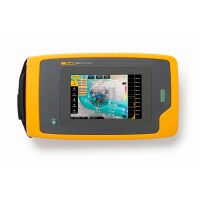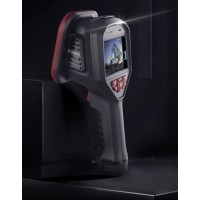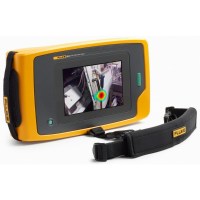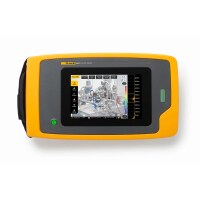


Fluke ii915 Acoustic Imager: detecting, locating and assessing abnormalities
The Fluke ii915 Acoustic Imager is a powerful tool designed for identifying and evaluating problems in various systems. With three different modes - LeakQ™, PDQ™ and MecQ™ - this innovative device enables maintenance professionals to take proactive measures and prevent costly problems. Let's take a look at the features:
Leak detection with greater sensitivity
LeakQ™ mode: detect hidden costs
Leaks in compressed air, gas, steam and vacuum systems can lead to significant financial losses. The Fluke ii915 simplifies leak detection by enabling technicians to visualise sound. As they scan hoses, fittings and connections, the built-in acoustic array records decibel levels by frequency. The resulting SoundMap™ app is overlaid over a visual image, making it easy to locate leaks, even during peak hours. Say goodbye to time-consuming inspections and meet efficient leak detection. The Fluke ii915 has the high frequency range and best sensitivity to perform acoustic leak detection more efficiently.
Early identification of mechanical problems
MecQ™ mode: efficient inspection of conveyor systems
Conveyor belt systems are known for their complexity and risk of disrupting production. The Fluke ii915 acoustic camera revolutionises inspections by enabling non-contact scanning of large areas. Advanced noise filtering ensures clear images even in high noise environments. Early detection of potential mechanical problems enables targeted maintenance, preventing unplanned downtime. For seamless operation and proactive maintenance of large conveyor systems, the Fluke ii915 Acoustic Imager with MecQ™ is the ultimate choice.
Visualising the invisible threat
PDQ™ mode: locate partial discharge
Partial discharge poses serious risks, from arcing to power failure. The Fluke ii915 translates sounds at partial discharge into visual images, accurately indicating the location. With an extended frequency range of 2-100 kHz, this instrument can detect partial discharge even earlier and help in maintenance planning to prevent catastrophic events. High-voltage electricians, electrical engineers and grid maintenance teams can now see what was once invisible.