
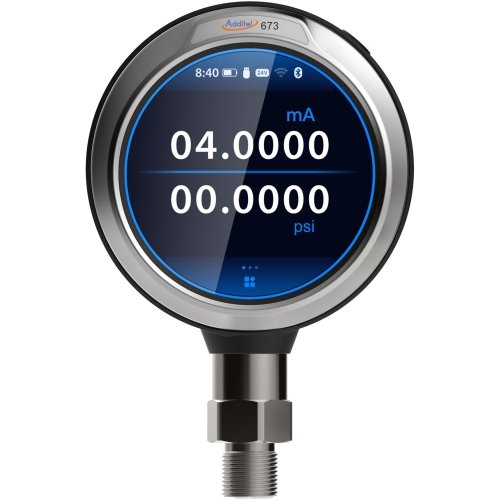
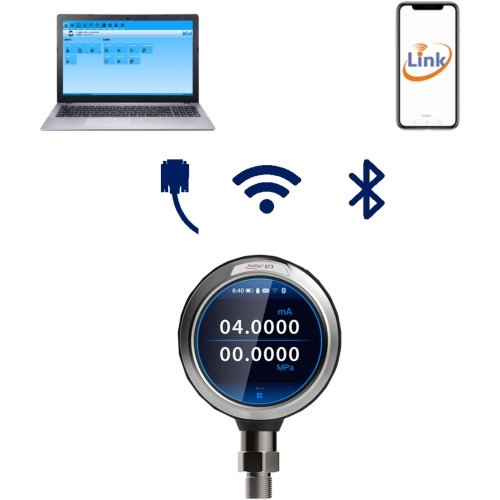
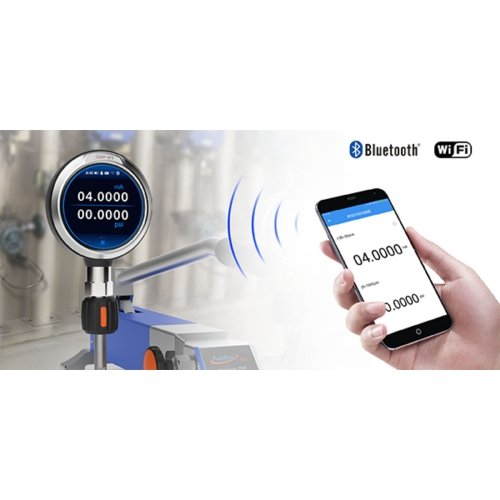

Additel's 673 Advanced Digital Pressure Calibrators will redefine the way you want to perform pressure calibrations and pressure measurements! With wireless remote connectivity, microprocessor technology, state-of-the-art silicon pressure sensors and optional on-board storage, these attractive and fully temperature-compensated calibrators offer the performance, durability and reliability you have come to expect from Additel products. The all-new modern menu structure and operator interface bring a new and refreshing experience to pressure calibration operations. This completely new way of interacting with our pressure calibrators makes the 673 Advanced digital pressure calibrators a real pleasure to use. The convenient Additel Link app allows users to monitor these calibrators remotely using a tablet or mobile phone. You can choose from a plethora of options, allowing you to configure these pressure calibrators to meet your specific pressure calibration and measurement needs. With an IP67 rating, you will find that these amazing pressure calibrators can be used in the field or laboratory as they meet the most demanding pressure calibration needs.
A modern user experience:
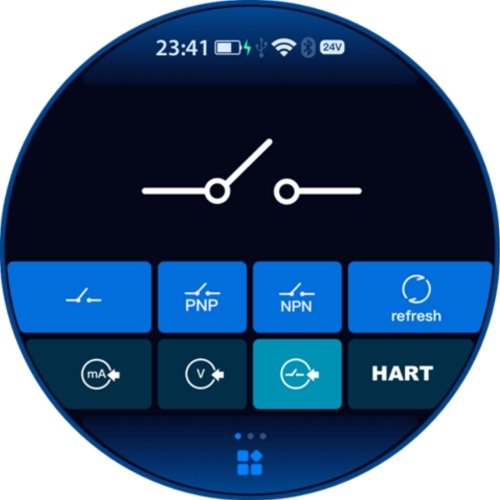
Additel has made every effort to provide our customers with the best possible experience when using this new and revolutionary calibrator. The 3.4-inch colour touchscreen comes with a protective, replaceable tempered glass screen and is a refreshing update to the traditional push-button interface. With an easy-to-navigate menu structure and fast touchscreen response, you will find that these ADT673 calibrators are simple yet powerful to use. The easy-to-read display is not only fun to use, but it is robustly built to meet the demands of a busy technician in the field or laboratory.
HART field communicator:
With full support for HART communication protocols, the 673 Advanced Digital Pressure Calibrators provide a pressure calibration solution for transmitters over a wide pressure range. The ADT673 is an easily portable device that can accurately measure pressure thanks to its built-in pressure sensor, but you can also read the mA or mV signal output from a transducer. It can even provide a supply voltage (loop power) to sensors or transmitters during calibration.